
Why campervan accessories fail faster than expected
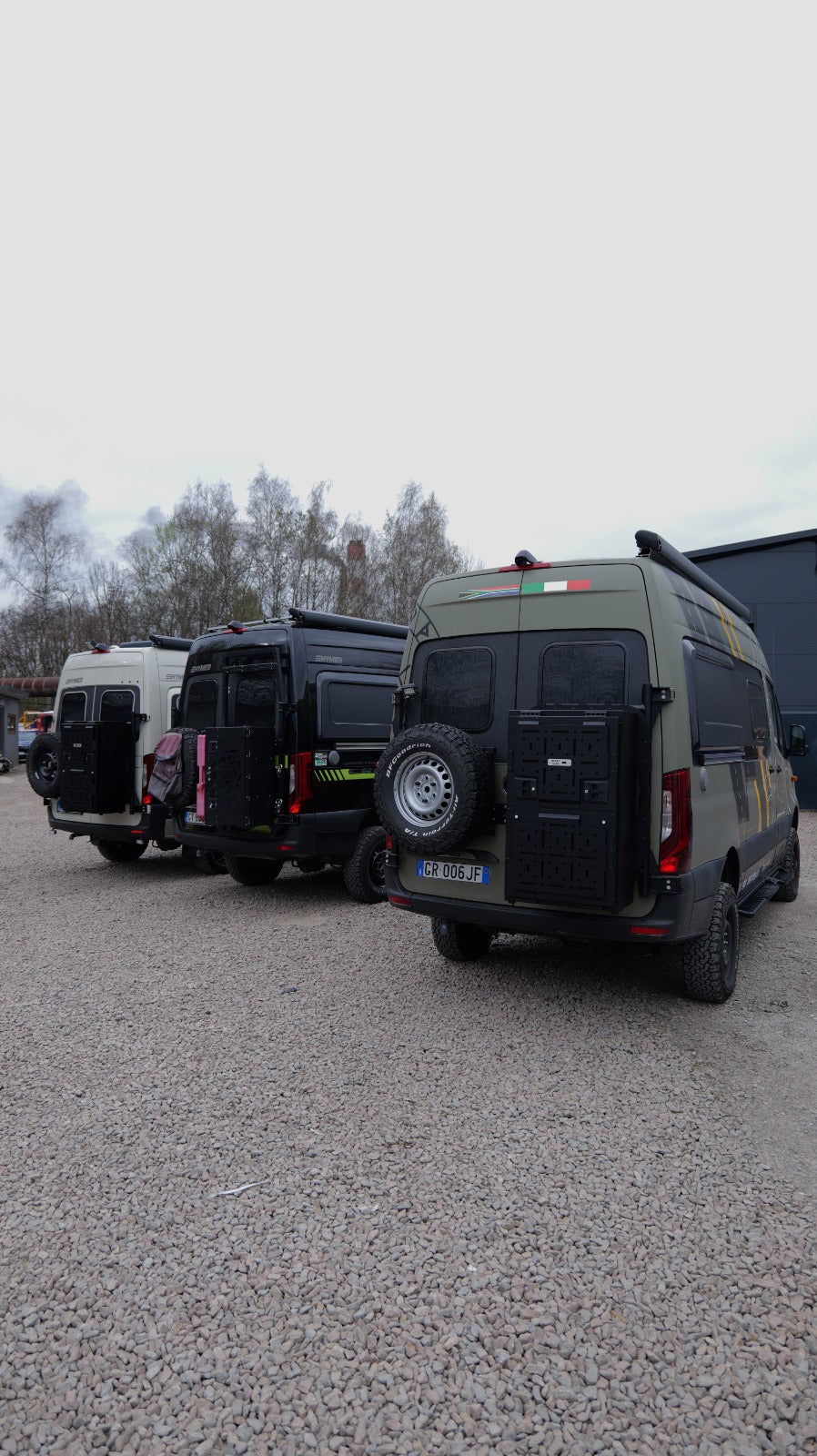
Traveling in a campervan quickly separates well-designed gear from products that only look solid. On paper, everything seems durable – a campervan roof rack, a spare wheel carrier for a van, or a full roof platform setup. But after real-world use – dust, rain, vibrations, and long distances – weaknesses start to show.
What’s important is that failures rarely come from one extreme situation. Instead, they are usually the result of small, repeated factors that slowly degrade materials and connections over time.
Moisture and corrosion – the silent process
Why water is more dangerous than it seems
You don’t need extreme off-road conditions to damage your gear. Everyday exposure to rain, mud, or road salt is enough. Once a surface gets slightly scratched, moisture can reach the material underneath.
In steel components, this starts corrosion that gradually spreads and weakens the structure. This is why many modern solutions, such as a campervan spare wheel mount or roof racks for Ducato, Sprinter, or Crafter, are increasingly made from aluminum.
How material choice changes everything
Aluminum naturally resists corrosion, which makes it far more suitable for long-term outdoor use. When combined with a high-quality protective finish, it significantly slows down the degradation process caused by moisture and environmental exposure.

Vibrations – the hidden force behind failures
Constant movement, constant stress
Driving on uneven terrain creates continuous vibration. Even on relatively mild gravel roads, every component is constantly moving on a micro level.
Over time, this leads to:
- loosening connections
- small structural shifts
- eventual instability
This is especially relevant for parts like a campervan roof platform or a rear door spare wheel carrier, where both weight and leverage amplify the effect.
Why design matters more than thickness
Durability is not just about making parts heavier or thicker. It’s about designing structures that can absorb and distribute forces properly without creating stress points.
Scratches and surface damage – where problems begin
Small damage, long-term consequences
Scratches are unavoidable. Branches, stones, or gear on the roof will eventually damage the surface.
While they may seem cosmetic at first, they expose the underlying material and reduce protection against environmental factors. This is often the starting point for further degradation.
The role of protective coatings
A durable powder coating does more than improve appearance. It acts as a barrier against abrasion and weather, significantly extending the lifespan of components like roof racks, ladders, and external mounts.

UV exposure and temperature cycles
The long-term effect of sun and heat
Campervans often spend hours exposed to direct sunlight. Surfaces heat up, then cool down at night. This repeated cycle causes gradual stress in both materials and coatings.
Lower-quality finishes tend to:
- fade
- lose structure
- develop microcracks
Why resistance to UV matters
A coating designed to withstand UV exposure maintains both its protective function and appearance over time, even under constant outdoor conditions.
Overloading and real-world forces
Static vs dynamic loads
Load ratings are usually based on static conditions. In real driving, especially off-road, forces are much higher due to movement and impacts.
A small bump can multiply the effective load on:
- a van spare wheel carrier
- a campervan roof rack
- a fully loaded roof platform
Why safety margins are critical
Well-designed components account for these dynamic forces, not just theoretical limits. This is where real durability is defined.
Installation – the often overlooked factor
When good products fail
Even high-quality accessories can wear out quickly if installed incorrectly. Uneven tightening, internal stress, or poor fitment can cause parts to behave unpredictably under load.
Why proper mounting matters
Correct installation ensures that forces are distributed as intended, reducing unnecessary stress and extending the lifespan of the entire system.
What this means in practice
When you look at all these factors together, one thing becomes clear. Off-road durability isn’t about making products look rugged. It’s about understanding how materials behave over time under real conditions.
This is where the difference between generic solutions and purpose-built systems becomes visible.
At RoverVansGear, the approach is based on that exact understanding. Instead of focusing on appearance alone, the design process prioritizes how products behave in daily use. Aluminum is used not just for weight reduction, but for its natural resistance to corrosion. Powder coating is selected not for aesthetics, but for its durability against scratches and weather exposure.
Equally important is how each component is designed – with proper material thickness, minimized stress points, and fitment tailored to specific vehicles like Ducato, Sprinter, or Crafter. The goal is not to create the heaviest or most “aggressive-looking” product, but one that performs consistently over time.

Final thoughts
Choosing the right campervan roof rack, spare wheel carrier, or other exterior accessories is not just about design or features. It’s about understanding what actually wears them down.
Moisture, vibration, surface damage, UV exposure, and improper load handling – these are the real factors that determine durability.
And in the long run, it’s the products designed with those realities in mind that truly last.
Aktie:
Why Aluminum Is the Best Material for Overlanding and Campervan Builds
How to Optimize Your Campervan Roof and Make the Most of It